Aston Martin DB2: where the DB legend learned to walk (1950–1959)
The DB2 gave David Brown's initials their first great car, Frank Feeley's flowing coupe over the Lagonda six, raced at Le Mans and matured through the DB2/4 and Mk III into the family that fathered the DB4. A guide to the Feltham era, and what to check before buying.
Built 1950–1959 377 recorded sales
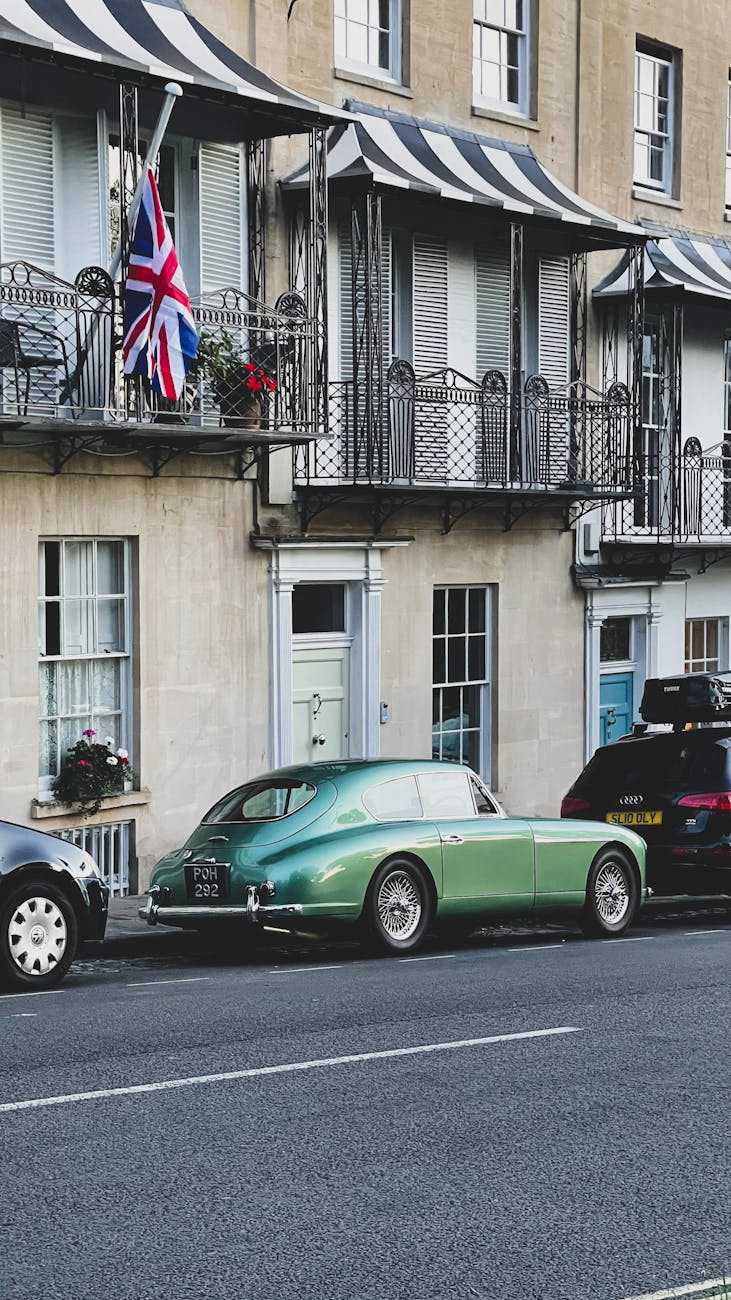
At a glance
- Years
- 1950–1959
- Body styles
- Fastback coupe, drophead coupe; 2+2 hatch from the DB2/4
- Drivetrain
- Front engine, rear-wheel drive
- Engines
- 2580cc, then 2922cc Lagonda twin-cam six (W.O. Bentley design)
- Power
- Around 105-195 bhp by specification
- Top speed
- Around 110-120 mph
- Trim levels
- DB2 and Vantage; DB2/4 Mk I and II; DB Mk III
- Production
- About 1,700 across the Feltham family
- Assembly
- Feltham, Middlesex (bodies latterly by Tickford, Newport Pagnell)
- Designer
- Frank Feeley
- Values
- Usable cars from around £110,000; good examples £140,000-£200,000; dropheads and racing history beyond
- The engine
- The Lagonda twin-cam six, designed under W.O. Bentley: the reason Brown bought Lagonda
- The innovation
- The DB2/4's opening rear hatch made it one of the first true hatchbacks
The models
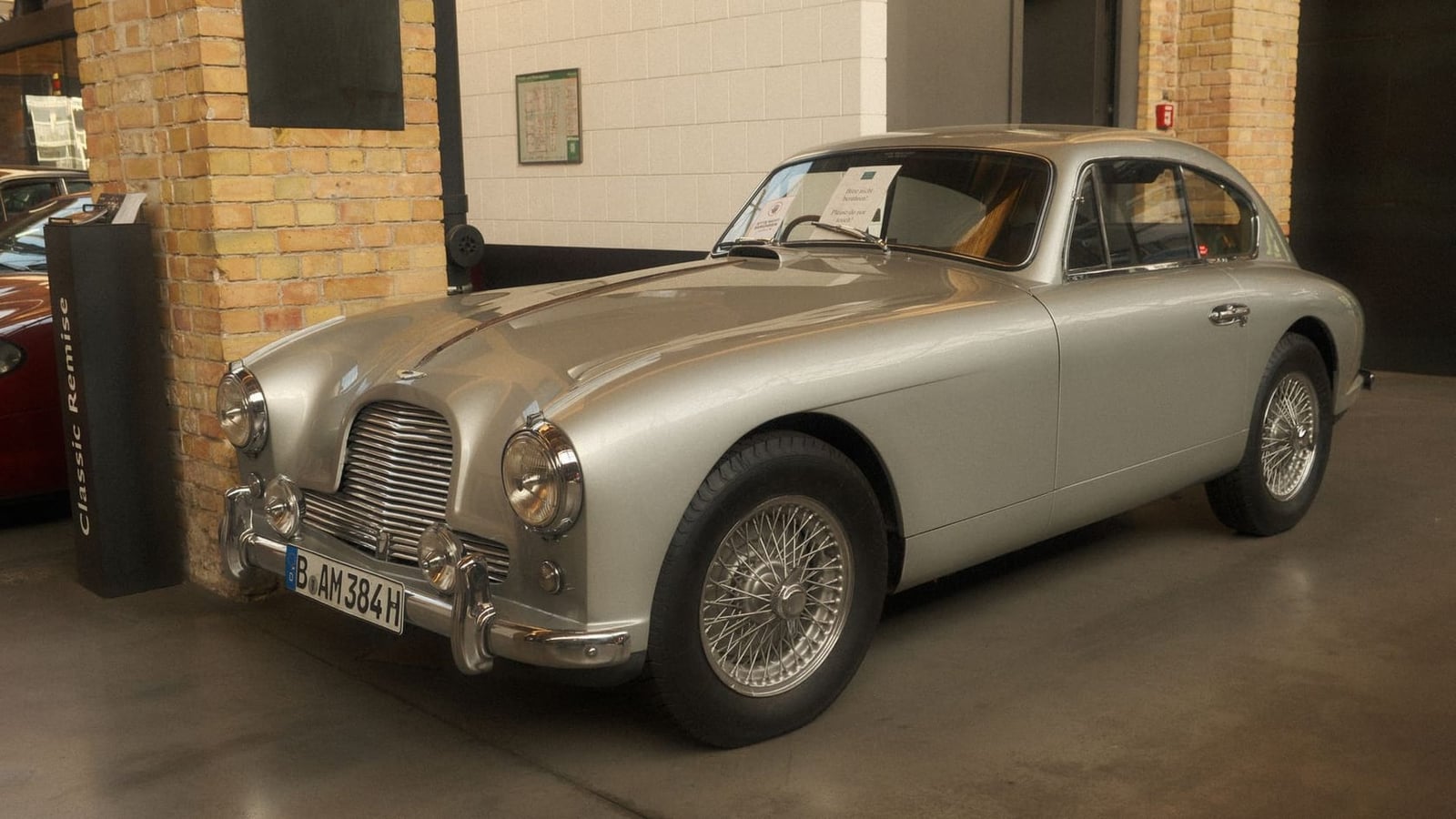
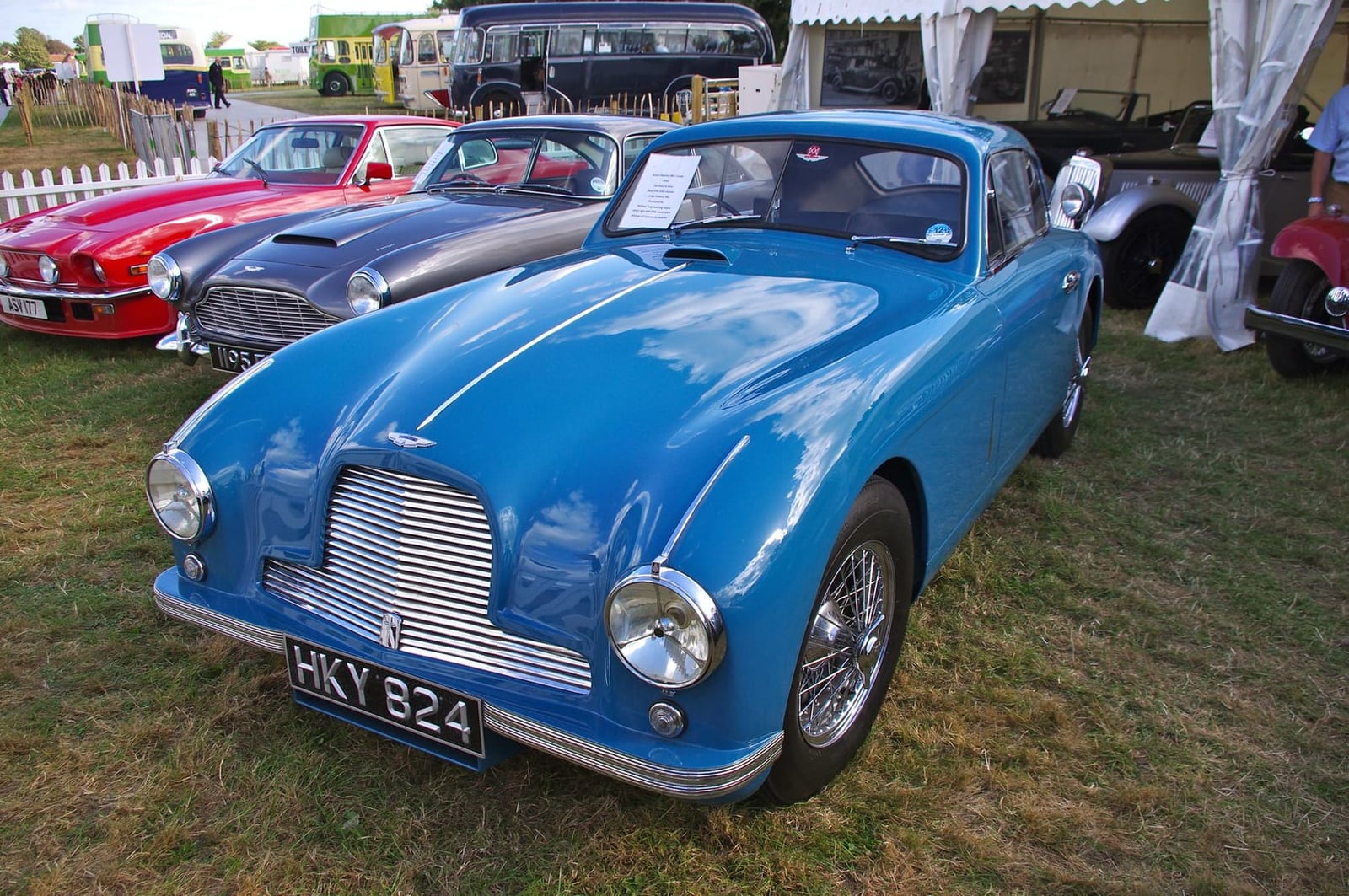
Before Newport Pagnell, before Touring of Milan, before the myth had found its machinery, there was Feltham: the Aston Martin DB2 of 1950 gave David Brown’s initials their first great car, Frank Feeley’s flowing coupe wrapped around the Lagonda twin-cam six that W.O. Bentley had designed, raced at Le Mans from its first summer, and matured through the DB2/4 and DB Mk III into the family that fathered the DB4. The Feltham cars are where the whole Aston Martin legend learned to walk.
Feltham finds its feet
David Brown’s 1947 purchases assembled the ingredients, Aston Martin for the chassis craft, Lagonda for the W.O. Bentley-designed 2.6-litre twin-cam six, and the 1950 DB2 combined them: Feeley’s aerodynamic fastback over a tubular chassis, 105 bhp (125 in Vantage tune), and genuine 110 mph pace with handling the road testers of austerity Britain struggled to praise adequately. Built at Feltham in Middlesex, trimmed like a London club, priced like a townhouse, it established the DB formula whole: racing engineering beneath coachbuilt manners.

Racing blood from the first
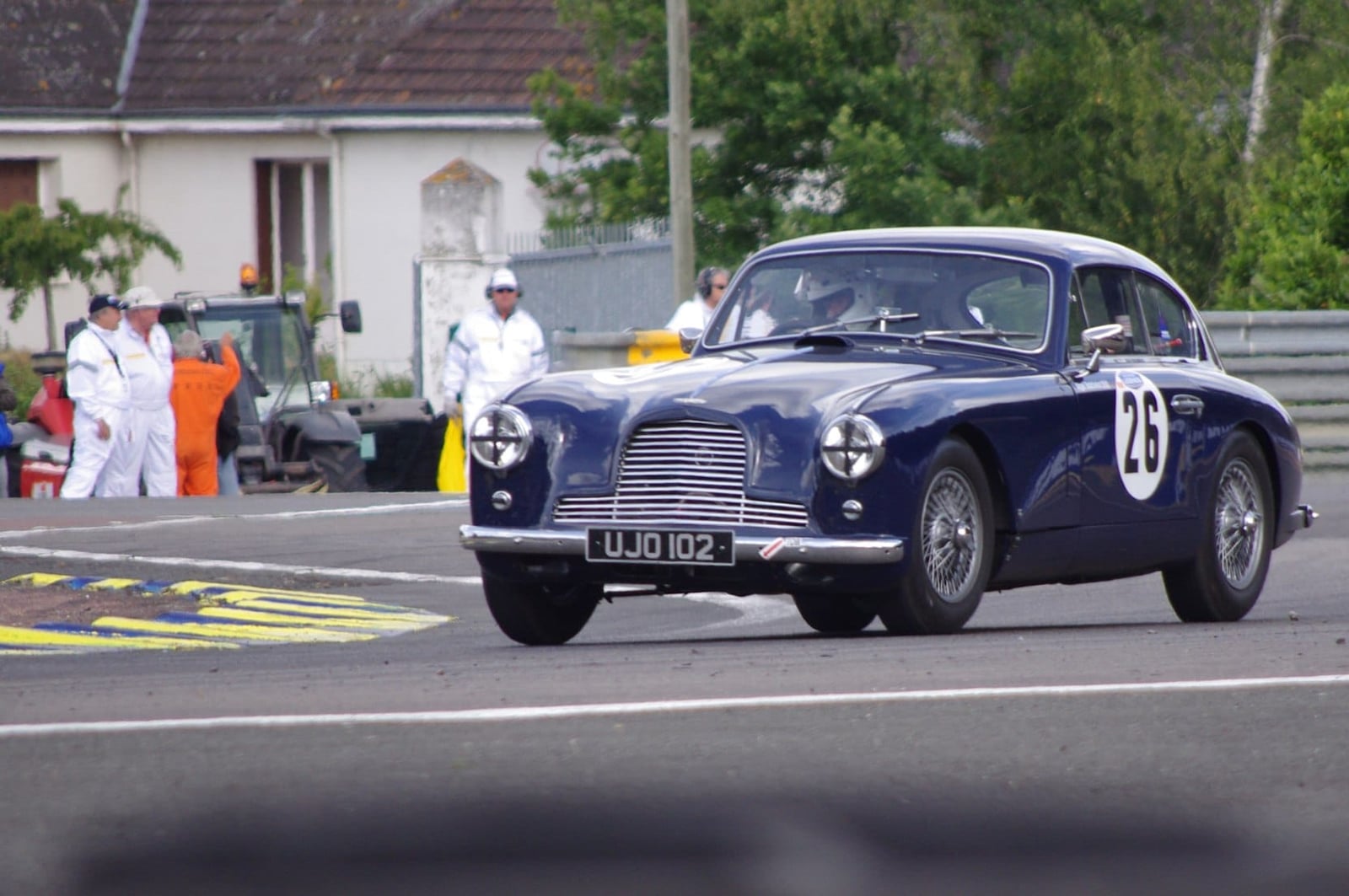
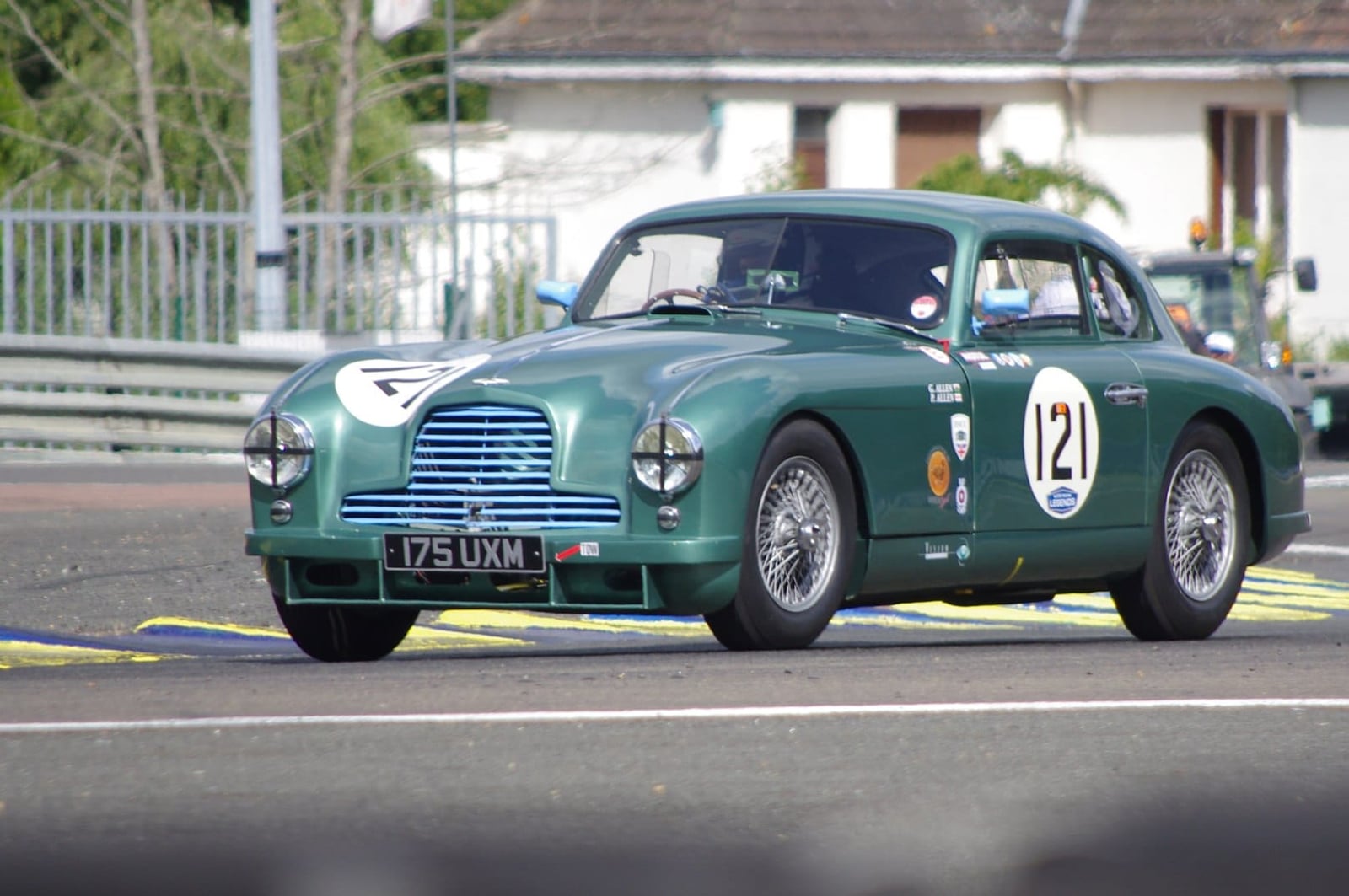
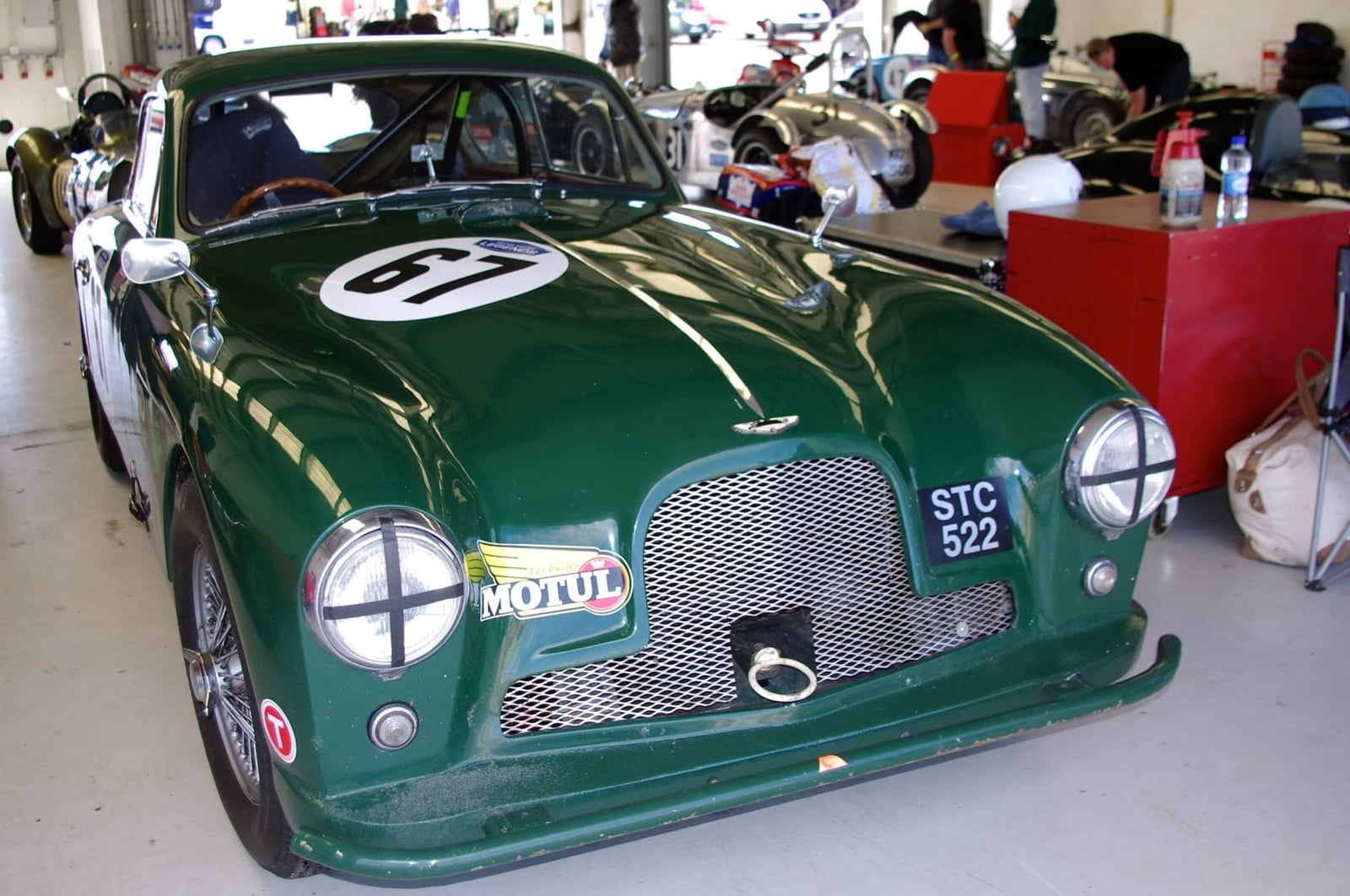
The works team wasted no time at all: DB2s finished first and second in class at Le Mans in 1950, the team cars VMF 63 and VMF 64 becoming period celebrities, and the model campaigned internationally while its engineering fed the DB3 and DB3S sports-racers that carried Aston to the 1959 championship summit. The competition thread runs unbroken through the family’s history and its market: Feltham cars with period racing provenance trade in another register entirely, and historic events still welcome them at full noise.

DB2/4: the accidental hatchback
The 1953 DB2/4 made the racer domestic with two occasional rear seats and a stroke of packaging genius: an opening rear hatch, glass and frame lifting whole, that makes it one of the first true hatchbacks years before the concept had a name. The 2.9-litre engine arrived alongside, the Mk II added subtle tail fins and Tickford bodywork as production migrated toward Newport Pagnell, and the family sold to exactly the fast-touring clientele Brown imagined, around 1,700 Feltham cars in all by decade’s end.

Mk III: the face arrives
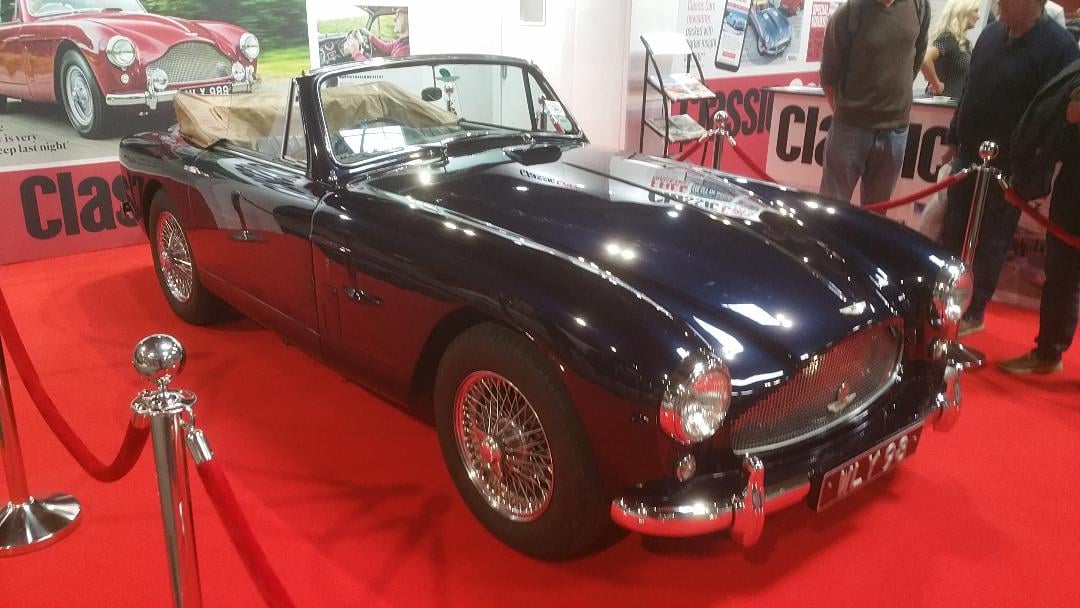
The 1957 DB Mk III completed the evolution and donated the marque its face: the DB3S-inspired grille whose shape every Aston since has echoed, over up to 195 bhp and, from 1957, front disc brakes among the first on any British production car. Around 550 were built to 1959, dropheads the rarities, and Ian Fleming lent the model literary immortality by seating James Bond in one in the Goldfinger novel, the cinema DB5’s paper ancestor. When the DB4 arrived in 1958, the torch simply passed to the next generation within the family.

Living with a Feltham Aston
The Feltham cars are the most companionable of the early Astons to own: the heritage operation supplies records and parts, the specialists know the Lagonda six intimately, and the family’s touring-event culture, from club rallies to the great continental tours, keeps the cars genuinely used rather than stored. The commitments are body framing and the twin-cam’s appetite for informed maintenance, both priced at marque rates; the rewards are entry to every event worth attending and membership of a survivor community where most cars know each other by chassis number. Dropheads and Mk IIIs lead the usability rankings, honest miles have become their own form of provenance in this market, and a Feltham car arriving at an event under its own power always outranks one arriving on a trailer.
What a DB2 is like to drive
The Feltham cars drive vintage-adjacent and race-bred at once: the twin-cam six pulls with eager, cammy urge and a bark the later sixes refined away, the steering is direct and honest, and the light chassis rewards momentum driving in the fifties sports-car manner. A Mk III’s discs and power ease it toward modern usability; the earliest DB2s keep the purest period intensity. All of them cover ground far faster than their age suggests, which was always the Feltham argument, and 1950s touring events remain their natural habitat.
Buying a Feltham Aston today
The rules are the family’s at slightly gentler money: factory build records and matching numbers first (the heritage operation traces every chassis), structural inspection of the tubular frame and body framing by the recognised specialists, and continuous history justifying the price. Verify model identity precisely, DB2, 2/4 Mk I or II, Mk III, since values step with each, confirm drophead originality, and treat racing-history claims to forensic standards given their multiplier. The legend’s first chapter costs half its DB4 sequel, and the smart Feltham money has noticed for years. The full record, 377 recorded sales with the dropheads at roughly twice the closed cars and a Vantage premium of about £70,000, is on the page covering what a DB2 sells for.
More photos
The DB2 family in dates
- 1950The DB2 combines David Brown's 1947 purchases: Aston Martin chassis craft and Lagonda's W.O. Bentley-designed 2.6-litre twin-cam six, under Frank Feeley's aerodynamic fastback.
- 1950DB2s finish first and second in class at Le Mans; the team cars VMF 63 and VMF 64 become period celebrities.
- 1953The DB2/4 adds two occasional rear seats and an opening rear hatch, glass and frame lifting whole; the 2.9-litre engine arrives alongside.
- 1955The Mk II adds subtle tail fins and Tickford bodywork as production migrates toward Newport Pagnell.
- 1957The DB Mk III donates the marque its face with the DB3S-inspired grille, up to 195 bhp and front disc brakes among the first on any British production car.
- 1959Production ends at about 1,700 Feltham cars, around 550 of them Mk IIIs.
DB2 family: what to check before you buy
Identity, which sets the value step
- DB2, DB2/4 Mk I, Mk II or DB Mk III: values step with each, so confirm precisely
- Factory build records and matching numbers, traced through the heritage operation
- Confirm drophead originality rather than accepting it
- Treat racing-history claims to forensic standards given their multiplier
Structure
- The tubular frame and the body framing, inspected by the recognised specialists
- Continuous history substantial enough to justify the price
- Body framing is priced at marque rates, so it belongs in the budget before the paint
- Tickford-bodied later cars differ in construction from the earliest Feltham ones
Mechanical and use
- The Lagonda twin-cam wants informed maintenance; the specialists know it intimately
- Mk III discs and power ease the car toward modern usability
- Honest miles are their own provenance here, and a car arriving under its own power outranks a trailered one
- Vantage tune carries a documented premium of its own
What the Aston Martin DB2 sells for at auction
In 2025 the median Aston Martin DB2 sold for £120,290 across 16 sales, 18% down on 2024. In real terms, typical Aston Martin DB2 prices were down about 45% over the five years to 2025, once inflation is accounted for.
| Variant | Sold | Typical range | Median |
|---|---|---|---|
| DB2/4 Fixed Head Coupe | 119 | £81,880 - £155,866 | £115,793 |
| DB2/4 Mk III Fixed Head Coupe | 114 | £101,676 - £182,372 | £132,780 |
| DB2 | 52 | £63,988 - £191,962 | £128,956 |
| DB2/4 Drophead Coupe | 30 | £139,756 - £313,940 | £217,884 |
| DB2/4 Mk III Drophead Coupe | 25 | £149,627 - £393,500 | £231,100 |
| DB2 Vantage | 22 | £149,245 - £248,300 | £198,754 |
| DB2/4 Drophead Coupe by Bertone | 10 | £651,608 - £962,738 | £740,963 |
Show the year-by-year mediansHide the year-by-year medians
| Year | Sold | Median | In 2025 money |
|---|---|---|---|
| 2026 (so far) | 6 | £190,298 | |
| 2025 | 16 | £120,290 | £120,290 |
| 2024 | 13 | £146,250 | £151,862 |
| 2023 | 20 | £115,708 | £124,166 |
| 2022 | 30 | £153,472 | £175,760 |
| 2021 | 25 | £128,800 | £159,269 |
| 2020 | 14 | £173,556 | £219,933 |
| 2019 | 19 | £181,891 | £232,847 |
| 2018 | 17 | £247,918 | £322,761 |
| 2017 | 17 | £173,500 | £231,110 |
| 2016 | 18 | £208,125 | £284,369 |
| 2015 | 24 | £181,647 | £250,673 |
| 2014 | 34 | £156,952 | £217,464 |
| 2013 | 11 | £184,800 | £259,699 |
| 2012 | 15 | £114,706 | £164,890 |
| 2011 | 32 | £122,834 | £181,101 |
| 2010 | 21 | £116,968 | £179,152 |
| 2009 | 7 | £89,500 | £140,512 |
| 2008 | 3 | £127,214 | £203,660 |
| 2007 | 9 | £61,085 | £101,197 |
| 2006 | 9 | £46,050 | £78,070 |
| 2005 | 4 | £60,094 | £104,446 |
| 2004 | 7 | £25,779 | £45,726 |
- £498,995DB2/4 Drophead Coupe by Bertone
- £121,140DB2/4 Fixed Head Coupe
- £190,063DB2/4 Mk III Fixed Head Coupe
- £414,030DB2
- £167,104DB2
Strong evidence. 377 recorded sales and a dozen or more a year: the median and the range are well founded. Based on 377 sold results from public classic car auctions (1995 to 10 August 2026). Sold prices, not asking prices, and not a valuation: condition, history and specification vary from car to car. Inflation-adjusted figures use the ONS CPIH index, in 2025 money.
Frequently asked questions
What engine does the Aston Martin DB2 have?
What is the difference between the DB2 and DB2/4?
Did the Aston Martin DB2 race at Le Mans?
Is the DB Mk III the same as the DB2?
How much does an Aston Martin DB2 sell for?
What is the most expensive Aston Martin DB2 ever sold at auction?
How often does an Aston Martin DB2 come up for sale?
Related across themes
More from Aston Martin


Recently added

Bentley Turbo R: the blown Bentley that saved the badge (1985–1999)

Bentley S-series: the quiet twin with the beautiful secrets (1955–1965)

Rolls-Royce Silver Spirit and Silver Spur: the last Crewe bargain (1980–1999)
